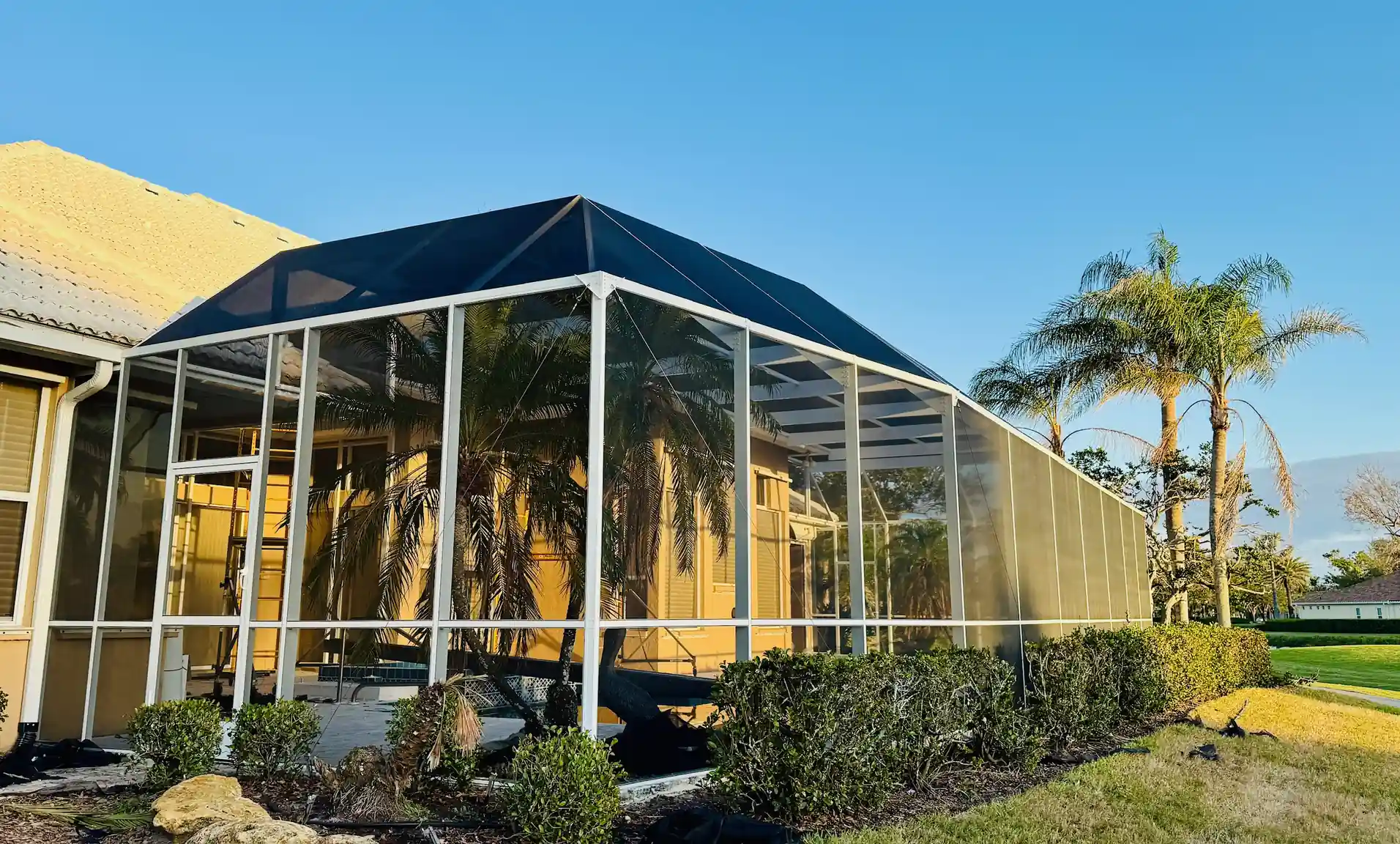
Florida pool cages are built to handle sun, humidity, rain, and storms—but even the best enclosures do not last forever. Over time, screen mesh weakens, screws rust, aluminum fades, and structural components begin to wear down.
The lifespan of a pool cage depends on several factors:
- Screen material
- Distance from the coast
- Maintenance
- Storm exposure
- Quality of installation
- Hardware and fasteners used
In Florida, a properly maintained pool cage can last decades, but different components age at different speeds.
Average lifespan of a Florida pool cage
Aluminum structure
The aluminum frame itself can often last 20–40+ years.
Most pool cage structures do not fail because of the aluminum itself. The biggest issues usually come from:
- Rusted screws
- Corrosion around connections
- Hurricane damage
- Poor maintenance
- Structural movement over time
Homes near the coast usually experience faster deterioration because salt air accelerates corrosion.
How long does pool cage screen last?
Standard fiberglass screen
Typical lifespan: 5–8 years
Fiberglass is affordable and common, but Florida sun and storms eventually make it brittle.
Common signs of aging:
- Small tears
- Sagging mesh
- Fading
- Brittle texture
- Loose spline
Polyester screen
Typical lifespan: 10–15 years
Polyester screen is significantly stronger and more durable than standard fiberglass. It handles Florida weather better and resists tearing more effectively.
Many homeowners upgrade to polyester during rescreening projects because it provides:
- Better durability
- Improved storm resistance
- Longer lifespan
- Better long-term value
For a deeper comparison, see our guide to polyester vs fiberglass screen.
No-see-um (20×20) screen
Typical lifespan: similar to the base material used—usually about 7–15 years
The smaller mesh openings help block tiny insects, but dirt, debris, and moisture can make these screens require more maintenance over time.
What causes pool cages to deteriorate faster?
Florida UV exposure
Constant sunlight weakens:
- Screen mesh
- Paint coatings
- Plastic components
- Rubber seals
UV exposure is one of the biggest reasons older screens become brittle.
Salt air corrosion
Homes near:
- Sarasota Bay
- Anna Maria Island
- Venice Island
- Longboat Key
- Other coastal Florida areas
often experience faster rust and corrosion.
Salt exposure attacks:
- Screws
- Fasteners
- Cable systems
- Door hardware
This is why many restoration projects include upgrading to stainless steel screws.
Hurricanes and strong wind
Florida storms place constant stress on:
- Roof panels
- Connections
- Fasteners
- Hurricane cables
Even when a cage survives a storm, repeated movement and flexing can weaken the structure over time.
Signs your pool cage may need restoration
You may not need a full rebuild. In many cases, restoration can dramatically extend the life of your enclosure.
Common warning signs include:
- Rusted screws
- Loose panels
- Torn screens
- Faded paint
- Sagging roof sections
- Corroded hardware
- Structural wobbling
- Door alignment problems
- Missing hurricane cables
If caught early, these problems are often repairable before major structural damage occurs.
How to make a pool cage last longer
- Replace rusted screws early. Old steel screws expand as they rust and can damage the aluminum frame around them. Upgrading to stainless steel screws helps protect the structure long term.
- Replace damaged screens quickly. Small tears can become large failures during storms or windy conditions.
- Wash the structure periodically. Pressure washing helps remove dirt, mold, salt buildup, and organic debris—especially important near the coast.
- Inspect hurricane cables. Loose or damaged cables reduce structural reinforcement during storms.
- Repaint aging aluminum. Painting helps protect the aluminum frame while improving appearance and extending the enclosure’s lifespan.
Should you restore or rebuild a pool cage?
In many situations, restoration is the smarter investment.
A full restoration may include:
- Rescreening
- Stainless steel screw replacement
- Structural repairs
- Door repairs
- New hardware
- Pressure washing
- Painting
- Hurricane cable replacement
However, severely damaged or structurally compromised cages may require demolition and rebuilding. Read more in our guide on when to restore vs rebuild a pool cage.
A professional inspection can help determine which option makes the most financial sense.
Final thoughts
A Florida pool cage can last for decades when properly maintained, but every enclosure eventually needs repairs, restoration, or rescreening.
The key is addressing problems early—before corrosion, storm damage, or structural wear become major expenses.
If your pool cage is showing signs of aging, SCREEN ARMORS can help inspect the structure and recommend the best long-term solution for your home.
Want a professional opinion on your enclosure?
We can assess your frame, screens, fasteners, and cables and walk you through restoration options that fit your budget and timeline.
Explore our pool cage refurbishing and screening services, or return to the blog for more Florida pool cage guides.